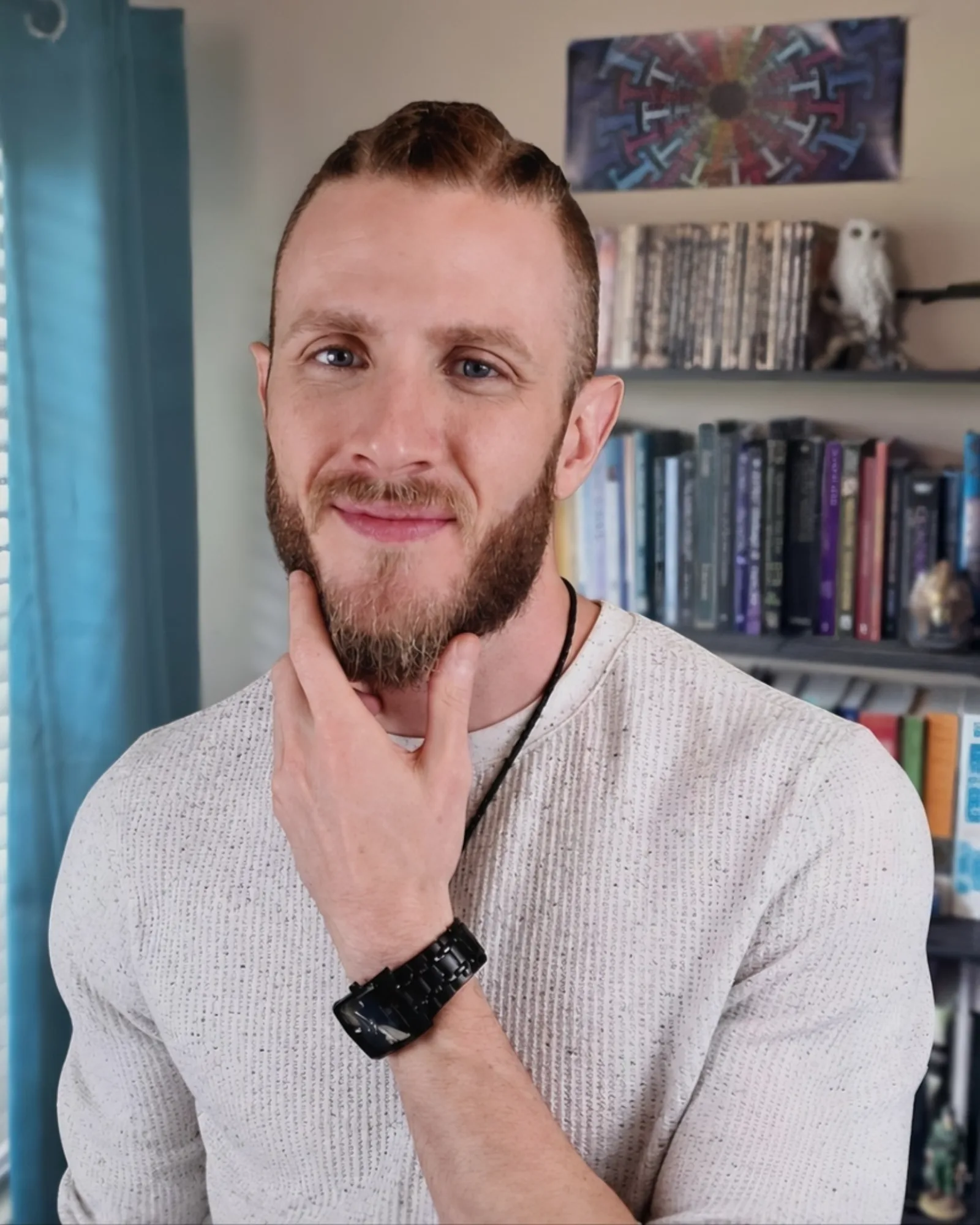
Sondor was created out of a personal need of my own. I've been a content creator for quite some time now, with multiple brands and platforms all vying for my attention and participation. That's a lot for any one human to manage.
Since the release and increasingly easy access of AI, I've been feeling that pressure to utilize such tools, because there's no denying the asymmetrical boon to productivity and consistency it offers. However, that pressure and draw has been heavily fraught and counterbalanced by a very strong and utter disgust at the torrential onslaught of AI slop, seemingly spreading like the Borg from Star Trek, infecting even very talented writers I've been following for a while.
That became a huge point of contention for me. It's something I've felt very frustrated by, yet helpless to do anything about, other than the simple choice not to participate or contribute to the grand symphony of slop. So no matter how strong that pull to lean on these tools felt, it never quite felt right. I felt like a hypocrite, participating in something I so palpably loathed to see from others.
I don't think it was a specific moment, and that's the point. It was an accumulation. It became so overwhelming that I found myself not even wanting to be on social media much, because I was constantly rolling my eyes at yet another AI slop post. Or I'd be ten minutes into a YouTube video and my ears would suddenly notice something about the phrasing, the structure of the script, and I'd realize it was just ChatGPT-generated, at which point I'd almost completely lose interest and often turn the video off. That's even part of why I stopped posting as much, because I knew I wanted to write longer-form content. I knew it was a way to express more complex and deep ideas in a format my normal punchy one-liners just couldn't tap into, but I struggled to find the time to carve out a real sit-down-and-write session.
So that's where the initial idea was born: how can I use AI to help me write more efficiently, without telling it to write for me?
I've always been fascinated and impressed by the Socratic Method. So that's where my instinct led me first. I love how using questions rather than statements naturally cuts through and takes a direct pathway to truth, and by its nature, it's all about using the answers verbatim, to pressure-test them against themselves later, to identify contradictory beliefs. So without any forceful shoehorning, it was already the perfect format for what I had in mind. That's how the first prototype of what would eventually become Sondor was born, unbeknownst to me: a single training doc called the Socratic Extraction Method, an instruction file for AI to follow to conduct these interviews.
I tested it on myself, and the results surpassed even my optimistic expectations. It worked shockingly well. The real turning point came when I started experimenting with a visualized artifact in Claude of my topical map. Once I had those two pieces, the topical map and the extraction method doc, I had an unshakable knowing that this was materializing into something greater. Without hesitation, I listened, I embraced it, and I've been building obsessively ever since.
That's how Sondor was born: out of a necessity to solve a problem for myself, one so useful I almost felt obligated to make it available to other people. I wanted to offer people a tool that gave them a different way of writing, one that leveraged the efficiency and productivity offered by AI without outsourcing their voice or creativity. That's exactly what Sondor is. I know many others feel the same way I do about AI slop.
Logan